 Artificial Intelligence
9 Best AI Apps for Students in 2026 — Free & Powerful
Discover the 9 best free AI apps for students in 2026 for studying, research, writing, and coding — with practical tips and real examples for each app.
What you will learn
- You will discover the 9 best AI apps designed specifically for students
- You will learn how to use each app to improve your grades and save time
- You will understand the difference between free and paid apps and which suits you
87% of students who use AI tools in their studies achieved higher grades — that's what Stanford AI Index's 2025 report revealed. The number isn't surprising when you realize these tools condense hours of research into minutes.
The problem? Dozens of apps emerge every week, and most aren't worth your time. After testing over 30 apps, here are the 9 best picks — all free or with discounted student plans.
If you're new to AI, start by reading AI Fundamentals to build a solid understanding before diving into the apps.
This list is updated for 2026 and focuses on apps that support Arabic or work effectively with Arabic content. Prices may change — always check the official website.
Which AI Apps Help Students with Research and Study?
Research and study apps transform how you search for and summarize information. Instead of reading dozens of pages, you get precise answers with sources in seconds — giving you back hours every week to focus on understanding rather than gathering.
1. Perplexity AI — The Smart Student Search Engine
Perplexity AI isn't an ordinary search engine — it's a research assistant that reads the internet and summarizes results with cited sources. Ask any academic question and you'll get an organized answer with links to original references.
Why it beats Google for students? Because it doesn't give you a list of links — it reads those links for you and extracts the answer. According to the UNESCO report, students using smart research tools save an average of 3 hours per week.
- Price: Free (5 Pro searches/day) — Pro at $20/month
- Best for: University research, literature reviews, answering complex questions
2. NotebookLM (Google) — Your Personal Study Companion
NotebookLM from Google lets you upload your notes and lectures as PDFs, then converts them into summaries, flashcards, and even an audio podcast you can listen to while commuting.
Upload a 50-page lecture and get a 2-page summary in 30 seconds. Imagine how much time you'll save before exams.
- Price: Completely free
- Best for: Lecture summaries, pre-exam reviews, creating flashcards
3. Consensus — Scientific Paper Search
Consensus specializes in searching peer-reviewed academic papers. Type your question and it searches millions of scientific papers, giving you an evidence-based answer with researcher consensus percentages.
- Price: Free (limited) — Premium at $8.99/month
- Best for: Master's and PhD theses, academic references
Use Perplexity for general questions and Consensus for scientific questions requiring peer-reviewed sources. Combining both gives you comprehensive research coverage.
What Are the Best AI Writing Apps for Students?
Academic writing consumes enormous time — from drafting to final proofreading. These apps streamline the process without writing for you; they help you write better and faster while maintaining your own voice.
4. ChatGPT — The All-in-One Assistant
ChatGPT needs no introduction. But most students use it wrong — copying answers directly. The right way? Use it as a private tutor that explains concepts and engages you in discussion.
According to McKinsey, students who use ChatGPT as a dialogue and learning tool (not for copying) improved their grades by 23% compared to non-users.
To get the most out of it, learn effective prompt writing from the Prompt Engineering Guide.
- Price: Free — Plus at $20/month (50% student discount at some universities)
- Best for: Concept explanations, review, brainstorming
Here's a practical example of using the ChatGPT API in a research project:
# Summarizing academic text using OpenAI API
from openai import OpenAI

client = OpenAI(api_key="YOUR_API_KEY")

def summarize_academic_text(text, language="en"):
    """Summarize academic text while preserving scientific terminology"""
    response = client.chat.completions.create(
        model="gpt-4o",
        messages=[
            {
                "role": "system",
                "content": f"You are an academic assistant. Summarize the following text in {language}, preserving scientific terms and key findings."
            },
            {"role": "user", "content": text}
        ],
        max_tokens=500
    )
    return response.choices[0].message.content

# Usage example
paper_text = "Recent advances in transformer architecture..."
summary = summarize_academic_text(paper_text)
print(summary)
5. QuillBot — Smart Paraphrasing
QuillBot specializes in rephrasing text while preserving the original meaning. Extremely useful when you want to convert a quote into your own words without risking academic plagiarism.
- Price: Free (125 words) — Premium at $9.95/month
- Best for: Paraphrasing references, improving academic writing style
Which AI Apps Help Students with Organization and Productivity?
Organization apps use AI to manage your time and tasks automatically — so you don't waste a minute planning instead of studying. Even the smartest student will struggle without proper systems for note-taking and scheduling.
6. Notion AI — The Smart Workspace
Notion with its built-in AI feature combines your notes, tasks, and schedules in one place. Write lecture notes then ask Notion AI to organize, summarize, and create a task list from them.
According to a Notion study, students using the app complete their tasks 40% faster than their peers.
- Price: Free for students (Education plan) — Plus at $10/month
- Best for: Note organization, group project management
7. Otter.ai — Lectures to Text
Otter.ai records lectures and converts them to written text instantly with speaker identification. Never miss a word from your lecture even if you're distracted.
- Price: Free (300 minutes/month) — Pro at $8.33/month
- Best for: Lecture recording, group project meetings
Otter.ai supports English excellently but Arabic support is currently limited. If your lectures are in Arabic, try "Palestine AI" or use the recording feature in NotebookLM.
What AI Coding Tools Should CS Students Use?
Coding tools for students accelerate learning by providing real-time assistance, explaining errors, and suggesting complete functions — letting you focus on understanding logic rather than syntax memorization.
8. GitHub Copilot — A Programmer by Your Side
GitHub Copilot writes code alongside you in real time. Write a comment describing what you want and it suggests the complete code. Perfect for learning new programming languages or completing graduation projects.
According to GitHub, programmers using Copilot complete their tasks 55% faster.
- Price: Free for students (GitHub Student Developer Pack)
- Best for: Graduation projects, learning programming, coding faster
For more advanced AI tools, check out our comprehensive guide to the best AI tools in 2026.
9. Wolfram Alpha — The Math Problem Solver
Wolfram Alpha isn't a new app, but its AI-powered features have evolved significantly. It solves mathematical equations step by step, draws graphs, and explains physics and chemistry concepts.
- Price: Free (basic) — Pro at $7.25/month (student discount)
- Best for: Mathematics, physics, statistics
Which App Fits Your Major?
| Major | Best App | Reason |
|---|---|---|
| Humanities | ChatGPT + QuillBot | Research writing and paraphrasing |
| Natural sciences | Wolfram Alpha + Consensus | Problem solving and scientific research |
| Engineering & CS | GitHub Copilot + ChatGPT | Code writing and concept explanations |
| Business management | Notion AI + Perplexity | Project organization and market research |
| Medicine & pharmacy | Consensus + NotebookLM | Peer-reviewed references and lecture summaries |
How Do You Use These Apps Smartly?
Having the apps is one thing; using them effectively is another entirely. Here are 4 golden rules to ensure maximum benefit without running into academic trouble.
Rule 1: Don't copy — learn. Use AI to understand concepts, not to copy answers. Universities are rapidly developing AI-generated content detection tools.
Rule 2: Always verify. AI makes mistakes sometimes — especially with numbers and references. Verify every piece of information from its original source.
Rule 3: Start with one app. Don't try to use all nine at once. Choose the best fit for your major and master it, then add a second app.
Rule 4: Know your university's policy. Some universities allow AI use and some prohibit it. Make sure you know the rules before relying on it for assignments.
Quick Recommendation: If you're short on time and don't know where to start — install ChatGPT + NotebookLM + Notion. These three cover 80% of your needs as a student regardless of your major.
؟Which AI app is best for university research?
Perplexity AI is the top choice for general research — it reads sources and summarizes with citations rather than just listing links. For scientific and academic work requiring peer-reviewed papers, use Consensus alongside Perplexity. For uploading your own lecture notes and textbooks, NotebookLM is unmatched and completely free.
؟Can AI apps help me write better essays?
Yes, but use them as editors rather than ghostwriters. Write your first draft yourself, then use ChatGPT to identify weak arguments, QuillBot to improve phrasing, and Grammarly to fix grammar. This workflow improves your writing while keeping your voice intact and avoiding plagiarism concerns.
؟Is GitHub Copilot really free for students?
Yes — GitHub offers the Student Developer Pack which includes GitHub Copilot Pro free for verified students. You need to verify your student status with a .edu email or school ID through GitHub Education. The pack also includes other valuable developer tools at no cost.
؟How do I avoid academic dishonesty when using AI tools?
Use AI for understanding (ask it to explain concepts), brainstorming (generate topic ideas you then research yourself), and editing (improve grammar and structure of your own writing). Never submit AI-generated text as your own work without disclosure. Always check your institution's specific AI use policy — rules vary significantly between universities.
؟What AI app helps most with exam preparation?
NotebookLM is exceptional for exam prep — upload your lecture slides and notes, then ask it to generate practice questions, create flashcards, or summarize key concepts. For mathematics and science, Wolfram Alpha's step-by-step problem solving reinforces understanding. For memorization, Quizlet AI creates smart flashcard decks that adapt to your weak areas.
؟Can I use these AI apps on my phone?
Yes. ChatGPT, Perplexity, Notion, Otter.ai, and Quizlet all have dedicated mobile apps for iOS and Android. NotebookLM works in mobile browsers. GitHub Copilot requires a desktop editor but is accessible on laptop for coding. Most apps sync across devices so you can switch between phone and computer seamlessly.
؟Are there free AI writing tools without word limits?
Claude's free tier and ChatGPT's free tier offer daily usage without strict word limits (though there are session limits). For paraphrasing, QuillBot's free tier handles 125 words per session — enough for short passages. For unlimited paraphrasing, QuillBot Premium at $9.95/month is the most cost-effective option for students.
؟How much time can AI tools save a student per week?
UNESCO data shows students using smart research tools save an average of 3 hours per week on research alone. Adding smart note-taking (Otter.ai, NotebookLM) and writing assistance (ChatGPT, QuillBot) can save 5-8 hours weekly. Over a semester, that adds up to 75-120 hours — time you can redirect to deeper learning or rest.
Start Now
The nine apps we covered aren't a luxury — they're tools that the smart student can no longer go without. Your classmates are using them right now, and the gap widens every day between those who leverage these technologies and those who ignore them.
Your next step is simple: choose one app from the list, sign up today, and try it on your next assignment. You'll notice the difference from the very first time.
Sources & References

Related Articles
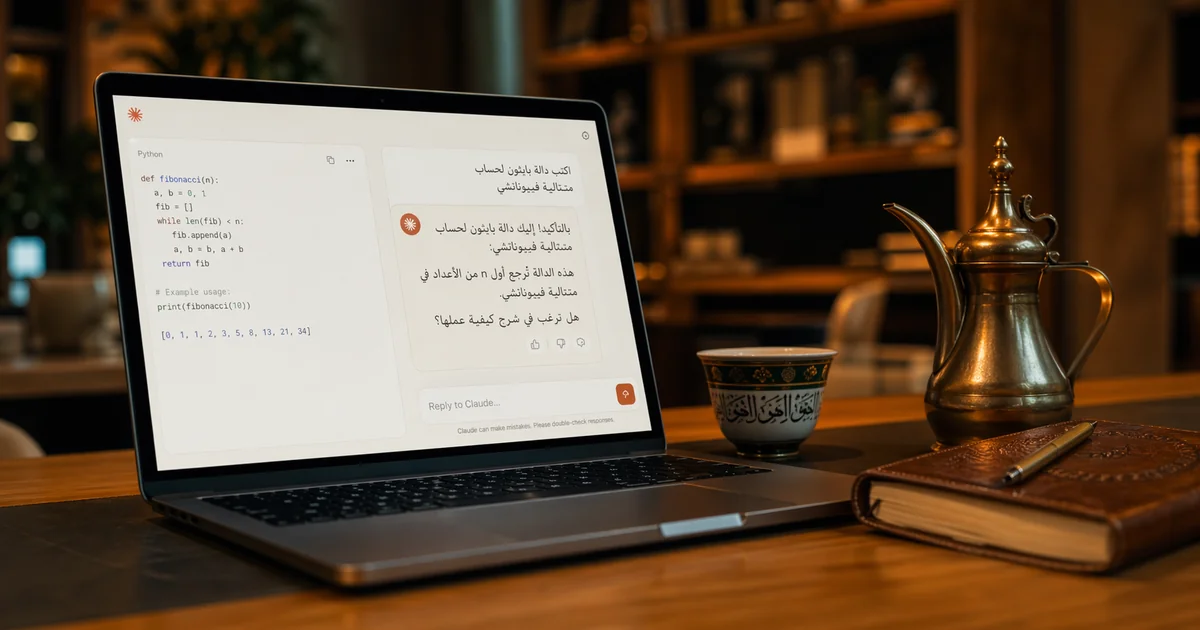
Claude AI Complete Guide 2026: Use It Free and Effectively
Learn how to use Claude AI for coding, writing, and study. Practical walkthrough of sign-up, pricing, the three models, and a ChatGPT comparison.
How to Start a Faceless YouTube Channel with AI in 2026
Start a faceless YouTube channel with AI in 2026. Discover free and paid tools to create scripts, voiceovers, and videos — without appearing on camera.
7 Best AI Coding Tools 2026: Cursor, Copilot & Claude Code
Discover the 7 best AI coding tools in 2026. Try Cursor, Copilot, Claude Code, and Windsurf — with pricing, real code examples, and which one fits your workflow.