 Tech Career Path
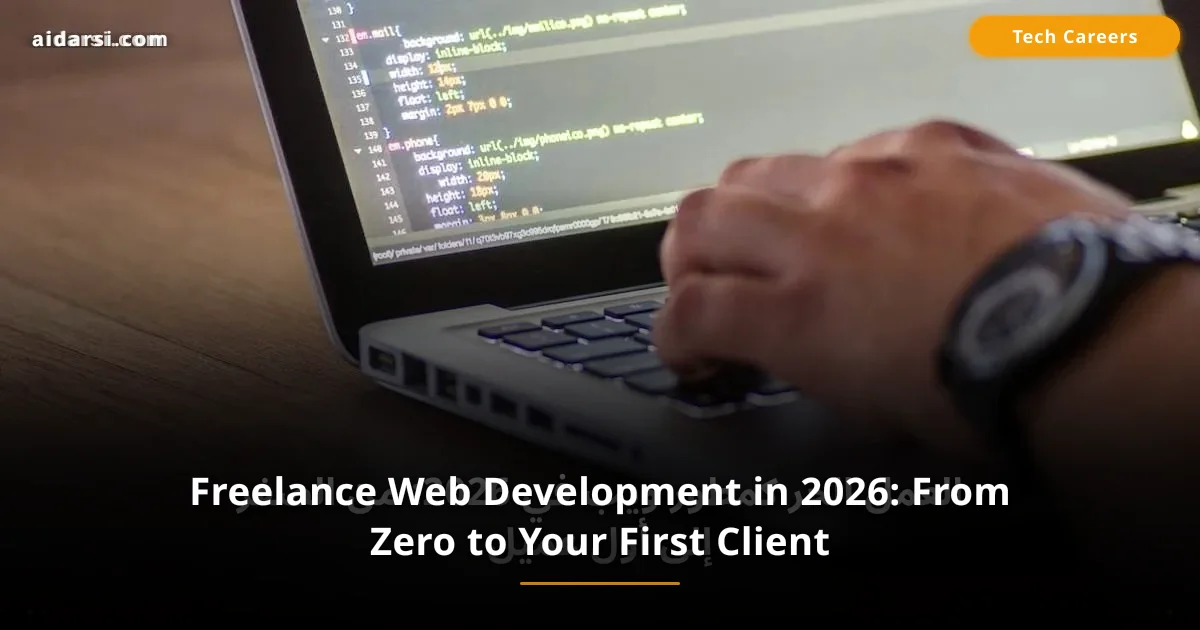
Freelance Web Development in 2026: From Zero to Your First Client
A complete guide to starting freelance web development in 2026 — platforms, pricing strategies, building a portfolio, and landing your first client with expected earnings.
What you will learn
- You will learn step-by-step how to start freelancing as a web developer from scratch
- You will understand pricing strategies and how to choose the right platforms
- You will discover how to build a portfolio and land your first client
Why Should You Consider Freelance Web Development?
The freelance web development market keeps growing year over year. In 2026, the global freelance market exceeds $12 billion, and web development ranks among the most in-demand specializations. But why do developers choose this path?
Freelancing offers three advantages that a traditional job rarely delivers simultaneously: you choose your projects, your location, and your income ceiling.
- Choose your own projects — Work on what excites you and skip the boring stuff
- Time and location freedom — Work from anywhere in the world, whenever you want
- Uncapped income — No salary ceiling. The more skilled and experienced you get, the more you earn. The average freelance developer makes between $50,000 and $80,000 annually, while top professionals exceed $150,000 per year
- Diverse experience — Working across different industries and technologies enriches your resume
If you are considering building a career in tech, freelancing is one of the best options available today. Before starting, make sure you understand which programming languages are most in demand so your skills align with market needs.
What Are the Essential Skills You Need?
Before starting your freelance journey, make sure you have these core skills:
Technical Skills
- HTML, CSS, and JavaScript — The golden trio of web development
- A modern framework — React, Next.js, or Vue.js (pick one and master it)
- Backend development — Node.js, Python, or PHP
- Databases — PostgreSQL or MongoDB
- Git and GitHub — For code management and team collaboration
- Responsive design — Tailwind CSS or Bootstrap
Non-Technical Skills
Soft skills matter just as much as coding:
- Clear communication — Understanding client requirements and explaining technical solutions in simple terms
- Time management — Organizing tasks and meeting deadlines
- Negotiation — A vital skill for setting prices and contract terms
- Self-marketing — Building your personal brand
Which Freelance Platforms Should You Use?
Upwork — Top Choice for Beginners and Pros
Upwork is the largest freelance platform in the world, offering a wide range of opportunities for web developers at every level.
Advantages:
- Massive global client base
- Payment protection system (Escrow)
- Hourly or fixed-price contracts
- Rating system that builds your reputation over time
Tips for Success on Upwork:
- Write a professional English profile
- Start with competitive rates to build your first reviews
- Send customized proposals for each project (no copy-paste)
- Respond to client messages within a few hours
Fiverr — Start with Specific Services
Fiverr works differently — you list your services (Gigs) and clients come to you.
Advantages:
- Easy to create services and set prices
- Three pricing tiers (Basic, Standard, Premium)
- Great for small and mid-sized projects
Popular service ideas:
- WordPress website design and development
- Converting Figma designs to web pages
- Fixing CSS bugs and responsive design issues
- Building landing pages
Toptal — For Highly Experienced Developers
Toptal accepts only the top 3% of applicants, making it a platform for professionals seeking large projects and Fortune 500 clients.
Advantages:
- Very high rates ($100–$200/hour and up)
- Fortune 500 company clients
- Long-term, stable projects
Requirements:
- At least 3–5 years of experience
- Passing tough technical assessments
- Excellent English communication skills
Arabic Platforms
Arabic-language platforms also offer great opportunities:
| Platform | Specialty | Price Level |
|---|---|---|
| Mostaql | All specialties | Medium |
| Khamsat | Micro-services | Low – Medium |
| Baaeed | Remote jobs | Medium – High |
| Nafezly | Various projects | Medium |
How Do You Set Your Freelance Rates?
Pricing is one of the hardest decisions for new freelancers. Here is a practical framework:
How to Calculate Your Hourly Rate
// Calculate your ideal hourly rate
const calculateHourlyRate = (config) => {
  const { monthlyExpenses, desiredProfit, workingHoursPerMonth, utilizationRate } = config;

  // Utilization rate: actual paid working time (usually 60-70%)
  const billableHours = workingHoursPerMonth * utilizationRate;
  const hourlyRate = (monthlyExpenses + desiredProfit) / billableHours;

  return Math.ceil(hourlyRate);
};

const myRate = calculateHourlyRate({
  monthlyExpenses: 2000,      // Monthly expenses
  desiredProfit: 3000,        // Target profit
  workingHoursPerMonth: 160,  // Working hours per month
  utilizationRate: 0.65       // Utilization rate
});

console.log(`Suggested rate: $${myRate}/hour`);
// Output: Suggested rate: $49/hour
Pricing Tiers by Experience
| Level | Experience | Hourly Rate (USD) | Per-Project Rate |
|---|---|---|---|
| Beginner | 0–1 year | $15 – $30 | $200 – $1,000 |
| Intermediate | 1–3 years | $30 – $60 | $1,000 – $5,000 |
| Advanced | 3–5 years | $60 – $100 | $5,000 – $15,000 |
| Expert | 5+ years | $100 – $200+ | $15,000+ |
Based on this table, here are the expected annual earnings for a full-time freelancer (1,500 billable hours per year):
- Beginner: $22,500 — $45,000 per year
- Intermediate: $45,000 — $90,000 per year
- Advanced: $90,000 — $150,000 per year
- Expert: $150,000 — $300,000+ per year
These figures are real and based on data from global freelance platforms. The key is gradual growth — do not expect to reach the advanced level in your first year, but with persistence you will get there.
Important Pricing Tips
- Do not start too cheap — Low prices attract bad clients and are hard to raise later
- Price per project, not per hour — The faster you get, the more you earn
- Add a 20–30% safety margin — Projects always take longer than expected
- Raise your rates every 6 months — As your skills and reviews improve
How Do You Build a Freelance Portfolio from Scratch?
Your portfolio is your most important marketing tool. Here is how to build one even if you have no clients yet:
Suggested Personal Projects
- Professional personal website — Your first project should be your own site
- E-commerce store — Using Next.js and Stripe
- Task management app — Showcasing React and API skills
- Dashboard — With charts and real data
- Clone a popular site — Such as a landing page for a well-known company
Elements of an Ideal Portfolio
Every project in your portfolio should include:
- Screenshot or video — First visual impressions matter a lot
- Problem and solution — What was the problem? How did you solve it?
- Technologies used — Show the diversity of your skills
- Project link and source code — On GitHub
A portfolio with 4–5 excellent projects is far better than 20 mediocre ones. Quality always beats quantity.
How Do You Find Clients Outside Platforms?
Do not rely solely on freelance platforms. Here are additional channels to find clients:
Social Media
- LinkedIn — Post technical content regularly and connect with business owners
- Twitter/X — Engage with the developer community and show your expertise
- GitHub — Contribute to open-source projects
Cold Outreach
- Identify small and medium businesses that need website development
- Study their current websites and spot areas for improvement
- Send a personalized message explaining how you can help
- Offer a free analysis as a sample of your expertise
Building a Network
- Attend tech conferences and local events
- Join developer communities on Discord and Slack
- Help others for free — a good reputation attracts clients
Content Marketing
- Write technical articles on your personal blog
- Create educational videos on YouTube
- Share useful solutions and code on social media
How Do You Manage Projects and Client Relationships?
Before Starting a Project
- Write a clear contract — Including scope, deadlines, pricing, and payment terms
- Collect an upfront deposit — Usually 30–50% of the project value
- Define scope precisely — To avoid free extra requests (Scope Creep)
During the Project
- Send weekly updates — Even if the client does not ask
- Use project management tools — Such as Trello or Notion
- Document everything — Decisions, changes, and approvals
After Delivery
- Ask for a review — Positive reviews are gold in freelancing
- Offer limited support — Two free weeks builds long-term trust
- Ask for referrals — Ask the client if they know someone who needs your services
What Are the Most Common Freelance Mistakes to Avoid?
- Working without a contract — The biggest mistake beginners make
- Accepting every project — Learn to say "no" to unsuitable projects
- Pricing too low — Attracts difficult clients and burns you out
- Neglecting marketing — Do not wait for clients to come to you
- Not developing your skills — The market changes fast; keep learning
- Working without rest — Burnout is real; take regular breaks
؟Do I need a university degree for freelancing?
No. Most clients care about your portfolio and results more than your degrees. Practical skills and real projects are what convince a client to hire you.
؟How long before I land my first client?
It varies, but beginners usually need 2 to 8 weeks of consistent applications. The key is patience and continuously improving your profile.
؟Can freelancing be a primary income source?
Yes, but it is recommended to start as a side gig alongside your current job until you build a stable client base. When your freelance income reaches double your monthly expenses, you can transition fully.
؟What is the best programming language for freelancing?
JavaScript (with React or Next.js) is the most in-demand right now. Python is also highly sought after, especially in AI and data analysis. Choose the language that fits the type of projects you want to work on.
؟How do I handle a client who does not pay?
Always use a written contract and upfront payments. On platforms like Upwork, the escrow system protects you. For direct work, do not deliver the final code before receiving the last payment.
؟Can I freelance from Arab countries?
Absolutely. Global platforms like Upwork and Fiverr are accessible from anywhere. The only challenge may be receiving payments — services like Payoneer and Wise offer excellent solutions for Arab freelancers.
؟How do I write a proposal that wins clients?
A winning proposal does three things: it shows you read and understood the project description, it demonstrates relevant experience with a specific example or portfolio link, and it proposes a concrete next step (a brief call or a specific question). Avoid generic copy-paste proposals — clients receive dozens and spot them instantly. Personalization, brevity, and confidence in your relevant experience are what convert proposals into contracts.
؟How do I raise my rates without losing existing clients?
Give clients advance notice of at least 30 days before a rate increase. Frame it as a reflection of increased value and skill — not just higher costs. Raise rates on new clients first to validate the new price point, then bring existing clients up gradually. Long-term clients who value your work rarely leave over a reasonable rate increase; those who do were likely keeping your rates artificially low anyway. Most freelancers raise rates too rarely, not too often.
Wrapping Up
Freelance web development is a real opportunity to build an independent and profitable career. Start by developing your skills and portfolio, then launch on the right platforms. Remember that success does not happen overnight — patience, persistence, and continuous improvement are the keys.
If you are at the beginning of your tech journey, check out our comprehensive guide to building a tech career for a broader view of available opportunities. And if you are deciding between frontend or backend development, that article will help you make the right choice.
Sources & References

Related Articles
Freelance vs Full-Time Tech Job: Which Fits You in 2026?
A comprehensive comparison of freelancing and full-time tech employment in 2026 — salary, freedom, stability, career growth, and a practical quiz to help you decide.
The Future of Jobs and Work in 2026: AI and Remote Work
How are AI and remote work reshaping the job market in 2026? Discover new roles, modern work models, and the skills you need to thrive in the new workforce.

9 Best Freelance Platforms for Arabs in 2026: Compare and Choose the Right One
Discover the 9 best Arabic and global freelance platforms in 2026 with a detailed comparison of fees, withdrawal methods, and real income data — pick the right platform for your country and start your career today