 Tech Career Path
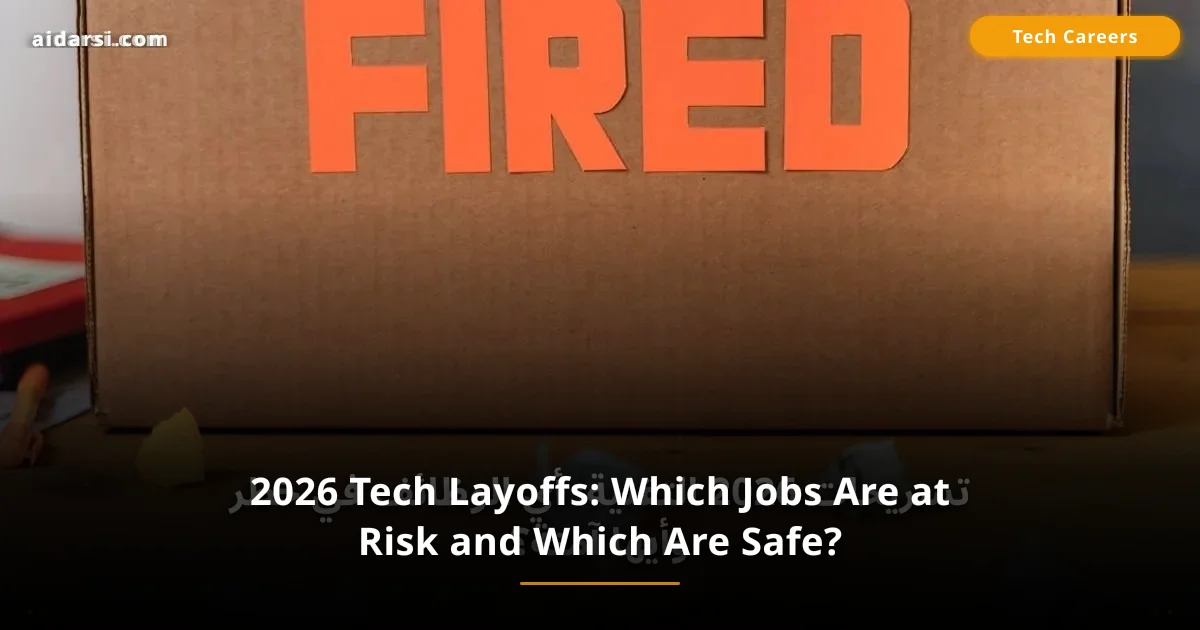
2026 Tech Layoffs: Which Jobs Are at Risk and Which Are Safe?
A new wave of layoffs hits major tech companies in 2026 — find out which roles are threatened and which skills will protect you from unemployment
What you will learn
- You'll understand the causes behind the 2026 tech layoff wave
- You'll learn which jobs are most threatened and which ones are safe
- You'll discover the skills that protect you from unemployment in the age of automation
Imagine Opening Your Email One Morning to Find: "We Thank You for Your Service"
That's what happened to 45,000 people in the tech sector during the first 3 months of 2026. These aren't ordinary employees — engineers, managers, and designers at companies like Meta, Dell, and SAP. Some of them thought their jobs were guaranteed.
The question you should ask yourself right now: is my job on the next list?
The Most Threatened Jobs — And Why Specifically
Not all tech jobs are at risk. The sorting is clear: jobs that automated tools can perform are the most vulnerable.
Technical Project Manager — High Risk
The biggest surprise of this wave. Companies discovered that AI-powered project management tools handle 70% of a traditional project manager's tasks — scheduling, tracking, reporting. The remaining tasks can be covered by engineers themselves.
Meta alone laid off 1,200 project managers and replaced them with smaller engineering teams using automated tools.
Junior Frontend Developer — High Risk
No-code tools and AI-powered UI generation have become good enough for basic tasks. A developer who builds simple pages without deep understanding of architecture — this role is shrinking fast.
But pay attention: a senior frontend developer who understands performance, accessibility, and complex application architecture is still highly demanded. The gap between junior and senior has become the difference between unemployment and an excellent salary.
Traditional Data Analyst — Medium Risk
Descriptive data analysis (what happened and why) can be done automatically by tools. But predictive and strategic analysis — connecting data to business decisions — still needs a human mind.
Safe Jobs — And What They Pay
On the flip side, some specializations aren't affected by the layoff wave — demand for them is actually growing:
| Job | Average Annual Salary | Demand Growth |
|---|---|---|
| Cybersecurity Engineer | $120,000 | +35% |
| AI/ML Engineer | $180,000 | +42% |
| DevOps/Cloud Engineer | $145,000 | +28% |
| Tech Lead | $165,000 | +20% |
Jobs that are hard to automate are the safest — focus on skills that AI can't replace.
Cybersecurity engineers face a global shortage estimated at 3.5 million unfilled positions. Every new ransomware attack — like the recent hospital attack — increases demand. If you're considering a career change, start here.
AI engineers — the same tools eliminating other jobs need people to build and develop them. Companies are laying off project managers to hire AI engineers at higher salaries.
What Separates Those Who Get Laid Off from Those Who Stay?
The key observation from layoff data: companies don't lay off everyone in a given specialty. They lay off those who don't add unique value. What makes you hard to replace?
Combining two specializations. A developer who understands cybersecurity. A data analyst who communicates well with management. An AI engineer who understands healthcare needs. The intersection of two skills creates value that tools can't replicate.
Building professional reputation. Those with a strong portfolio and presence on GitHub get opportunities even in the worst times. 70% of tech job opportunities come through referrals — not random applications.
Continuous learning at a steady pace. You don't need to learn everything — just one new thing each month added to your skill set. A cloud certification. A side project. An open-source contribution. Check the future of work in 2026 to understand broader trends.
Soft skills have become more important. Companies that laid off technical employees kept those who excel at communicating with clients and translating technical requirements for management. The ability to explain, persuade, and lead a team — these skills can't be automated. Learn about the most important soft skills for developers.
The Situation in the Arab Region
Layoffs aren't confined to Silicon Valley. Tech companies in Dubai, Riyadh, and Cairo have started following the same pattern — reducing support and management teams while hiring AI and security specialists instead.
But there's a real opportunity: the Arab region suffers from an acute shortage of specialized tech talent. Saudi Vision 2030 alone needs more than 100,000 new tech specialists. Recognized IT certifications open many doors in this growing market.
The difference between the Arab and Western job markets is that demand here still exceeds supply in sought-after specializations. Those who build their skills now will find excellent opportunities.
Practical Plan for the Next Three Months
Instead of waiting and worrying, here's what you can do right now:
Week one: Assess your current situation. Are your skills the threatened type or the safe type? Be honest with yourself.
Month one: Pick one new skill and start learning it. If you're a developer, learn cybersecurity fundamentals. If you're an analyst, learn AI basics.
Month two: Build a project that combines your current skill with the new one. Document it on GitHub.
Month three: Expand your network. Attend tech meetups. Connect with 5 new people in your field weekly on LinkedIn.
Are You Ready?
Layoffs aren't the end of the world — they're a clear signal that the tech job market is changing. Those who read this signal and act now will find themselves in a stronger position in 6 months. Those who ignore it and rely on "job security" — might be the next name on the list.
Read more: tech career guide and highest paying tech jobs and skills needed in 2026
Career Department — AI Darsi
Tech recruitment and career development consultants
Related Articles
Most In-Demand Jobs in 2026: Future Skills for the Job Market
97 million new jobs will emerge by 2030 while millions vanish. Discover the top 10 in-demand jobs in 2026 with salaries, skills, and how to qualify.
The Future of Jobs and Work in 2026: AI and Remote Work
How are AI and remote work reshaping the job market in 2026? Discover new roles, modern work models, and the skills you need to thrive in the new workforce.

No-Code: How to Build Professional Apps Without Writing a Single Line of Code
A complete guide to building apps without coding using the best No-Code platforms in 2026, with a Bubble, FlutterFlow, and Glide comparison, expected salaries, and a 3-month learning plan