 Cybersecurity
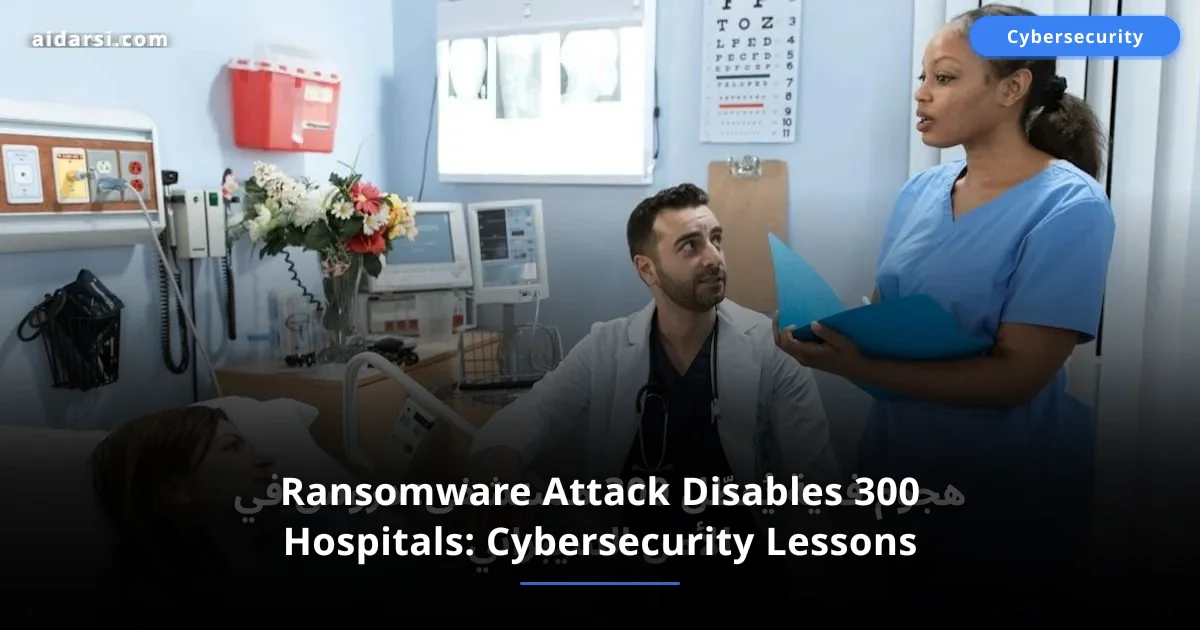
Ransomware Attack Disables 300 Hospitals: Cybersecurity Lessons
A new ransomware attack hits a US hospital network and shuts down emergency systems — what happened and how to protect your organization from ransomware attacks
What you will learn
- You'll understand how a single ransomware attack managed to disable 300 hospitals
- You'll learn the security lessons from this attack
- You'll discover how to protect your organization from ransomware
One Employee, One Click, 300 Hospitals Down
2:17 AM Chicago time. An HR department employee at the Ascension Health network opened an email that looked like a payroll system update. Just 37 minutes later, computer screens across 300 hospitals began displaying a single message: "Your files are encrypted. Pay or lose everything."
4.5 million patient records became hostage. Doctors went back to pen and paper. Surgeries were postponed. Emergency departments diverted patients to other hospitals.
Timeline of the Attack
The LockBit 4.0 group — one of the most dangerous digital ransomware gangs — executed the attack with calculated precision:
- 2:17 AM — A phishing email arrives in the employee's inbox. The link leads to a fake page mimicking the internal payroll portal
- 2:23 AM — The employee enters their credentials. The attackers gain internal network access
- 2:31 AM — The malware begins spreading through the SMB protocol from machine to machine
- 2:54 AM — Full encryption. $22 million ransom demanded in Bitcoin
The frightening part? From the first click to encrypting 300 hospitals took just 37 minutes. The security team didn't detect the attack until it was complete.
Why Hospitals Specifically?
You might ask: why don't attackers target banks or tech companies instead of hospitals? The answer is simple and terrifying — hospitals pay faster.
When hospital systems go down, it's not just a financial loss. Human lives are at stake. Every minute of downtime means an emergency patient not getting treatment. That's why 60% of targeted hospitals pay the ransom — the highest rate of any sector.
| Sector | Ransom Payment Rate | Average Amount |
|---|---|---|
| Healthcare | 60% | $4.5M |
| Education | 42% | $1.2M |
| Technology | 25% | $2.8M |
The deeper problem is that many hospitals run legacy systems that haven't been updated in years. Cybersecurity budgets in healthcare don't exceed 6% of the IT budget — compared to 15% in finance.
Lessons From This Attack for Every Organization
Don't think this doesn't apply to you. Ransomware attacks don't just target hospitals — any organization without adequate protection is a potential target. Here's what we learned from this incident:
First — Humans Are Always the Weakest Link
The best security technology is useless if an employee clicks a suspicious link. 91% of successful attacks start with a phishing email. Training employees on social engineering isn't a luxury — it's a survival necessity.
Second — Offline Backups Save Everything
Ascension Health ultimately didn't pay the ransom. But they needed 19 days to restore systems from backups. If the backups had been completely air-gapped from the network, recovery would have been much faster.
Third — 37 Minutes Was Enough Because of No Segmentation
The internal network was open — a machine in HR could directly access medical records servers. Network segmentation would have significantly slowed the spread and given the security team time to respond.
What About the Arab Region?
You might think these attacks are distant — happening only in America and Europe. But the numbers tell a different story.
Hospitals and healthcare institutions in the Gulf and Middle East experienced a 78% increase in ransomware attacks during 2025. The reason? Rapid digital transformation in healthcare without equivalent investment in security. Hospitals are adopting electronic medical records and smart systems, but their security teams number just two or three people.
Ransomware gangs have also started specifically targeting organizations in the Arab region because they know many prefer to pay quietly rather than disclose the breach. The absence of mandatory breach disclosure laws in some countries means these incidents go unnoticed.
Practical Protection Steps
Whether you work in a hospital, a small business, or are just protecting your personal devices:
- Enable two-factor authentication (2FA) on every account, no exceptions — if the employee had used it, the phishing would have failed
- Update your systems immediately — 80% of attacks exploit known vulnerabilities that already have patches
- Keep an offline backup that never connects to the network
- Train your team monthly to recognize phishing emails — make it hands-on exercises, not theoretical lectures
- Test your recovery plan before you need it — cybersecurity fundamentals include building an incident response plan
The Real Cost of the Attack — Beyond the Ransom
$22 million was the demanded ransom. But the real cost is far greater. Initial reports estimate Ascension Health's total losses at over $120 million — including recovery costs, expected patient lawsuits, operational losses during 19 days of downtime, and infrastructure rebuilding costs.
This means that the cost of proactive protection — however high it seems — is tens of times cheaper than the cost of recovery after an attack. A $1 million annual cybersecurity budget would have prevented a $120 million loss.
Final Thoughts
This attack isn't an isolated event — it's a recurring, escalating pattern. In 2025 alone, more than 3,800 ransomware attacks hit organizations worldwide. The difference between an organization that survives and one that pays millions comes down to preparation.
Don't wait until you see that message on your screen. Start today — review cybersecurity best practices and implement at least one step this week.
المصادر والمراجع
Cybersecurity Department — AI Darsi
Information security and digital protection specialists
Related Articles
The Most Dangerous Cybersecurity Threats in 2026 and How to Protect Yourself
A new cyberattack happens every 39 seconds. Discover the 8 most dangerous cyber threats of 2026 including AI attacks and ransomware, with practical protection tips
Warning: The Most Common Online Scams in 2026 and How to Avoid Them
Online fraud losses exceeded $12.5 billion globally in 2025. Learn the top 10 scams in 2026 with real-world Arab examples and instant protection tips
What Is a VPN and How Does It Protect Your Privacy Online?
What is a VPN and how does it work? A comprehensive guide explaining encryption protocols, VPN types, best trusted VPN services, and practical tips to protect your privacy